.svg)

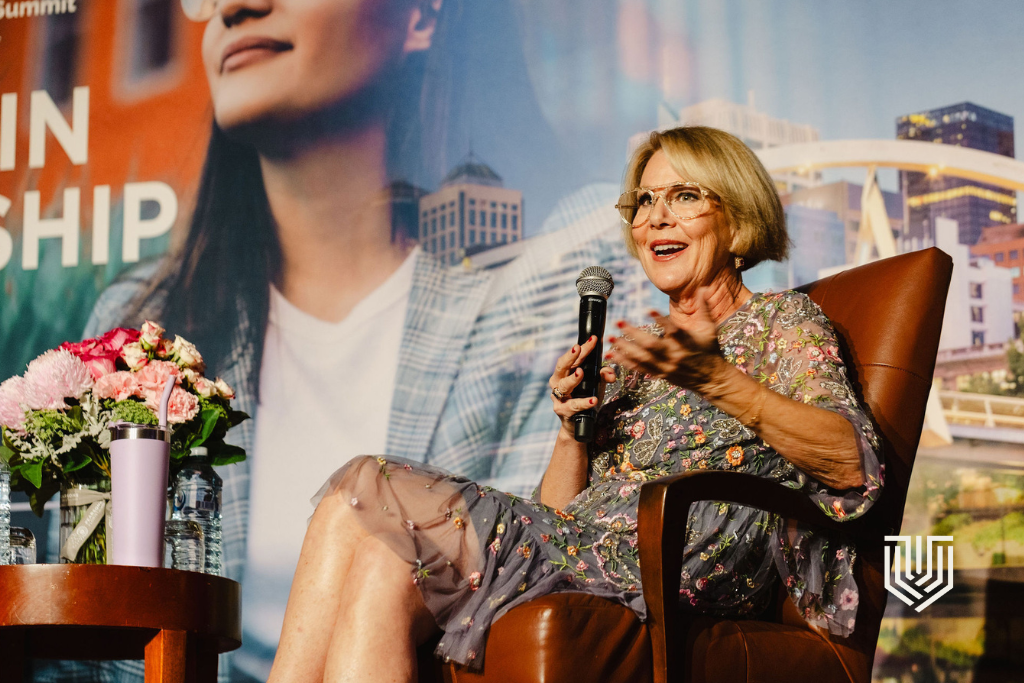
Why adaptability, humour and self-knowledge matter as much as ambition over a long career.
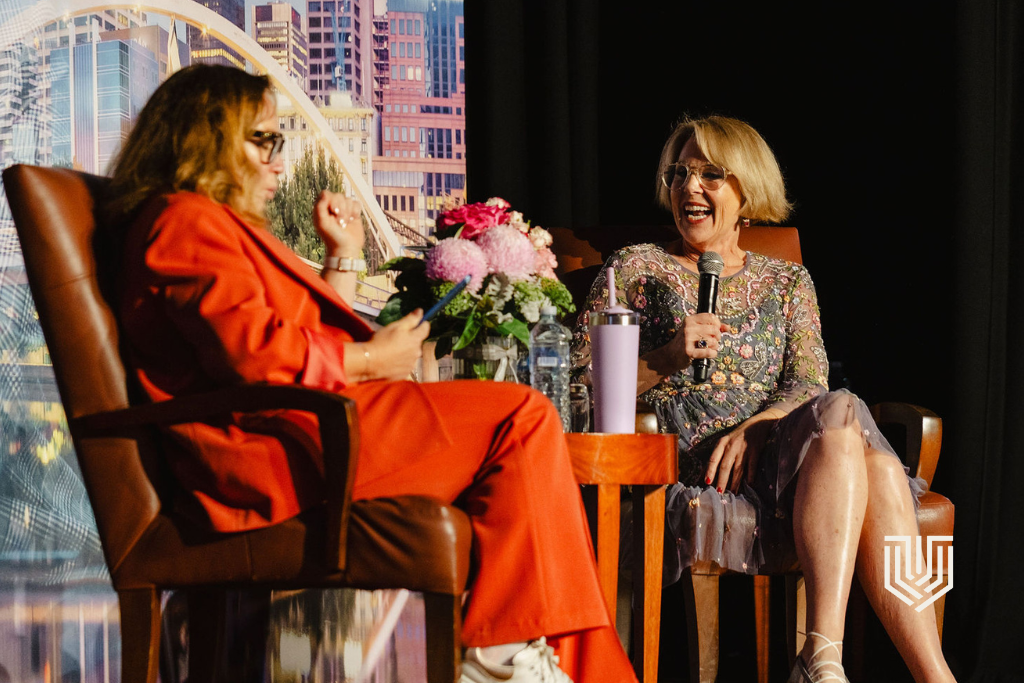
Most leadership advice is about projecting confidence and staying in control. But careers are long and rarely linear, and some of the most durable strengths are quieter ones. That came through powerfully in our closing fireside chat with Australian comedy icon and television legend Julia Morris, who closed day one of the Women in Leadership Summit in Melbourne with a candid, very funny and unexpectedly wise conversation about confidence, courage and not taking yourself too seriously. Days before she joined us one of her best-known shows was cancelled, and rather than hide from it she brought it straight into the room. Here is what stood out.
The phrase Julia kept returning to came from a bodyguard she worked with in South Africa: adapt or die. When her show fell over, she let herself feel the loss, then rang her agent that same week to start building what came next. The landscape is always shifting and budgets are tightening across almost every industry, and the people who get stuck defending how things used to be are the ones left behind. The skill is shortening the gap between a setback and the question that follows it. Adapting is not a one-off event. It is the job.
Imperfection builds trust
A lot of Julia's talk was about giving herself permission to be less polished, from the week spent agonising over what to wear to the false lashes that peeled off mid-event so she looked like she was winking at the room. Her tip was that if you put on red lipstick, no one notices anything else. The deeper point is that people warm to the real version of you far more than the faultless one, and the pressure to appear perfect, often heaviest on women, drains the very energy that makes you good at the work.
One of the most useful threads was Julia's openness about being assessed for ADHD and autism in her late 50s, and the relief of finally understanding patterns she had spent a lifetime being told off for. Her agent now sends a short, structured note before every commitment, the timing, the place and a prompt for a few examples, which handles the organising her brain finds hardest so she can do what she is brilliant at. The lesson for leaders is to build systems around how people genuinely work, not how you assume they should. Research shows women are typically diagnosed with ADHD years later than men, so a lot of capable people are quietly working twice as hard to mask the way their brains function.
Watch how you talk to yourself
How you speak out loud is what your brain hears. After accidentally cutting a hole in a dress one morning, Julia's instant reaction was "you idiot," before she caught herself: "You're not an idiot, you're in a hurry." Every time you confirm the harsh story you reinforce it, so choosing kinder, truer self-talk is one of the more sensible habits a high performer can build.
Humour is a survival skill
For Julia, comedy is how she gets through the hardest parts, from carrying her family through her father's decline to laughing off the knocks of a public career. When her show was cancelled, one write-up framed the legacy around her male co-host and noted that Julia "echoed similar sentiment" after twelve years co-hosting. Instead of stewing, she turned it into momentum for a tour. Her bigger reframe, the one she gives her daughters, is that we are not chasing happiness, which is a moving target, we are chasing more laughter in the ordinary parts of the day.
"We can do everything," Julia said. "But why?" That was the question she had never thought to ask. The pressure to do it all, and to do it perfectly, is largely self-imposed, and a long career depends on knowing what to let go. Setting clearer boundaries, tolerating less unkindness, and accepting that one plate left in the sink overnight is not a moral failing all protect the energy you need for what matters.
From insight to action
-
When something falls away, feel it properly, then move to "what now" faster than feels comfortable.
-
Build scaffolding around how you and your team actually work, not how you think you should.
-
Notice your self-talk and reframe the harsh version. You are listening.
-
Use humour to defuse pressure and criticism rather than absorbing it.
-
Stop chasing perfect. Ask whether the thing you are stressing over actually matters.
The takeaway
Confidence is not the absence of doubt, and courage rarely arrives with certainty. More often it looks like adapting quickly, backing yourself when nothing is locked in, and keeping enough perspective to laugh along the way. Julia's reminder was that resilience and lightness are not opposites. The ability to not take yourself too seriously might be one of the most underrated leadership skills there is.
With thanks to Julia Morris for a closing session that was as wise as it was funny.