.svg)

.jpg)
Your manager likely influences your mental health more than your therapist. Research indicates 70% of employees say their direct leader impacts their wellbeing more than their doctor or therapist. Becoming a leader isn't just about meeting business goals anymore. The positive news is leadership isn't an innate trait, and with the right approach, anyone can develop skills that truly matter in today's workplace.
Table of Contents
- The Current State of Leadership Development
- Build Self-Awareness as Your Foundation
- Develop Skills That Actually Matter
- Expand Your Network and Learn From Others
- Create Sustainable Growth Habits
- Why Most Leadership Development Fails
- Your Leadership Growth Starts Now
- Common Questions About Growing as a Leader
The Current State of Leadership Development
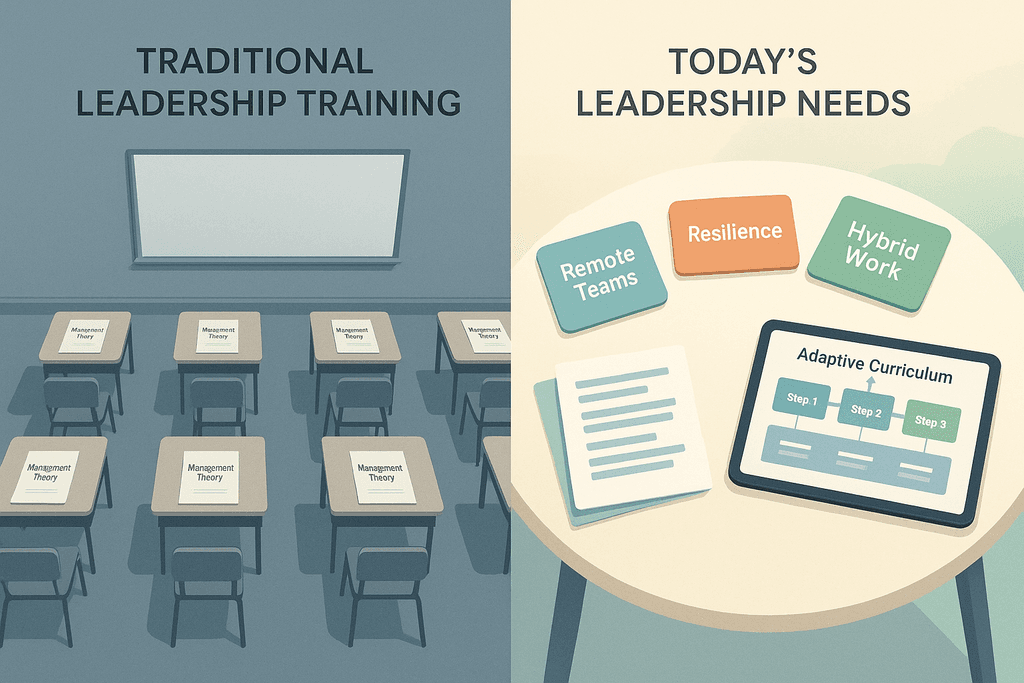
Most leadership training programs haven't changed much in twenty years. Typically, people sit in rooms, listen to lectures on management theories, maybe take a personality test, and then return to work unchanged. The issue is that while workplaces have evolved significantly, leadership teaching hasn't kept pace. Leaders today encounter challenges that didn't exist a decade ago, like managing remote teams and navigating diversity issues, yet many training programs still focus on outdated models that don't address these real-world situations.
Why Traditional Approaches Fall Short
The gap between what leadership courses teach and what leaders actually need keeps widening. Traditional programs often treat leadership like a checklist of skills you can master in a weekend seminar. But real leadership is more complex.
Here's what's missing from most traditional leadership training:
- Practical tools you can use on Monday morning when dealing with team conflict
- Real discussions on handling difficult situations like addressing unconscious bias or supporting neurodivergent team members
- Opportunities to learn from leaders who look or think differently than you
- Time to practice new skills in safe environments before using them in high-stakes moments
The Widening Leadership Gap
A growing gap between emerging leaders and executive roles is becoming harder to bridge. Many talented professionals remain stuck in middle management because they haven't had access to the right development opportunities. Organizations lose great potential leaders because traditional training doesn't prepare people for the complexity of senior roles.
The challenge is tougher for people from underrepresented groups. Women, First Nations professionals, LGBTIQA+ leaders, and people with disabilities often face additional barriers that standard leadership programs don't address. At The Leadership Institute, programs like the Women in Leadership Summit and Indigenous Leadership Summit specifically tackle these gaps by creating spaces where diverse leaders can develop skills while connecting with others who understand their unique challenges.
What Modern Workplaces Actually Need
Today's leaders need a different skill set than their predecessors. Managing complexity, embracing different perspectives, and adapting quickly matter more than ever. Companies are recognizing that diverse leadership teams make better decisions and drive better results.
Here's what separates leaders who thrive from those who struggle:
- Emotional intelligence to read the room and respond appropriately
- Resilience to bounce back from setbacks without burning out
- Cultural awareness to lead inclusive teams effectively
- Practical knowledge in areas outside their expertise, like finance or legal risk
| Traditional Leadership Competencies | Modern Leadership Competencies |
|---|---|
| Command and control management | Collaborative decision-making |
| One-size-fits-all communication | Adaptive communication across diverse teams |
| Focus on individual achievement | Building psychological safety for teams |
| Avoiding difficult conversations | Navigating conflict with empathy |
| Maintaining status quo | Leading through constant change |
| Technical expertise only | Cross-functional business understanding |
| Homogeneous perspective | Leveraging diverse viewpoints |
The shift from traditional to modern leadership isn't just about learning new buzzwords. It requires fundamentally rethinking how we develop leaders and what success looks like. Organizations that stick with outdated approaches risk losing their best talent to competitors who offer better development opportunities.
Leadership development is catching up. Programs now focus on actionable skills, real-world scenarios, and creating support networks. But understanding what modern leadership requires is just the starting point. The real question is how you actually develop these capabilities in yourself and your teams.
Build Self-Awareness as Your Foundation
Most leaders spend years trying to fix problems they don't fully understand about themselves. You can't lead others effectively if you don't know who you are, what triggers you, or where your blind spots hide. Self-awareness is the cornerstone of effective leadership, and it's the one skill that makes every other leadership capability stronger. Without it, you're essentially driving with a foggy windshield, making decisions based on incomplete information about your own patterns and tendencies.

Build Self-Awareness as Your Foundation
Think about the last time you received feedback that surprised you. That moment of surprise is usually a blind spot revealing itself. Understanding your strengths, weaknesses, and blind spots enables authentic leadership because you stop pretending to be someone you're not.
- Set aside 10 minutes each evening to reflect on your reactions during the day
- Ask three trusted colleagues for honest feedback about your leadership style
- Keep a journal tracking situations where you felt defensive or uncomfortable
- Notice patterns in the types of people or situations that drain your energy
- Record decisions you made and review them monthly to spot trends
Feedback from others provides invaluable perspective you can't see yourself, which is why the best leaders actively seek it out rather than waiting for annual reviews. The Leadership Institute's programs on Emotional Intelligence & Resilience help leaders develop these self-awareness muscles through practical exercises and peer feedback sessions.
Regular reflection practices create space for growth, but they only work if you're honest with yourself. Emotional intelligence starts with knowing your own emotional patterns, and that knowledge becomes the foundation for managing relationships, making better decisions, and staying calm under pressure.
Develop Skills That Actually Matter
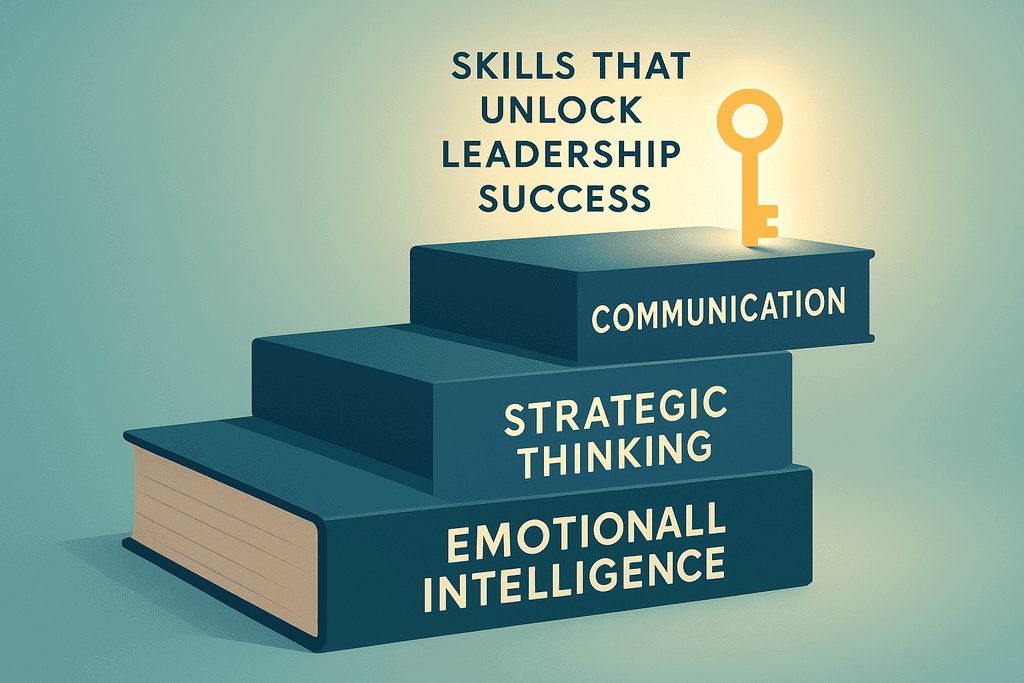
Here's something most leadership books won't tell you: technical expertise is what gets you promoted, but it's rarely what makes you successful once you're there. The skills that matter most in leadership roles are the ones that help you work through people, navigate complexity, and make decisions with incomplete information. Focus on high-impact skills like emotional intelligence, strategic thinking, and communication because these are the capabilities that separate managers from leaders. You can hire technical experts, but you can't outsource the ability to inspire a team or make tough calls under pressure.
Develop Skills That Actually Matter
Technical skills matter, but people skills drive leadership success in ways that spreadsheets and project plans never will. The leaders who advance fastest are the ones who can read a room, adapt their communication style, and build trust across different groups.
| Essential Skill | Why It Matters | Development Method |
|---|---|---|
| Emotional Intelligence | Manages relationships and conflict | Specialized training and practice |
| Strategic Thinking | Sees beyond immediate problems | Exposure to diverse perspectives |
| Financial Literacy | Makes informed business decisions | Targeted courses for non-finance leaders |
| Legal Risk Awareness | Protects organization from liability | Practical frameworks and case studies |
Continuous learning separates good leaders from great ones, but not all learning is created equal. Reading books helps, but nothing beats targeted training that addresses your specific gaps. The Leadership Institute offers masterclasses on topics like Finance for Non-Finance Managers and Managing Legal Risks for Leaders, designed to give you practical frameworks you can use immediately.
Specialized training addresses specific leadership gaps effectively because it's focused and actionable. Generic leadership advice sounds nice, but it doesn't help when you're facing a contract negotiation or trying to understand your department's budget constraints.
Expand Your Network and Learn From Others
The leaders you know matter almost as much as what you know. Your network directly impacts your leadership trajectory because opportunities, insights, and support all flow through relationships. Most people think networking is about collecting business cards or LinkedIn connections, but real networking is about building genuine relationships with people who challenge your thinking and expose you to different ways of leading. The most valuable connections aren't always the most senior people, they're the ones who see things differently than you do.
Learning from leaders in different sectors provides fresh perspectives that you'd never get staying in your own bubble. A public sector leader can teach a corporate executive about stakeholder management, while a startup founder can show a government manager how to move faster with less.
- Mentorship relationships accelerate growth by decades because you learn from someone else's mistakes
- Cross-industry connections reveal solutions your sector hasn't discovered yet
- Peer networks provide honest feedback without the politics of your own organization
- Diverse perspectives challenge assumptions you didn't know you had
Leadership summits and conferences create concentrated networking opportunities that would take years to build otherwise. Events like the Women in Leadership Summit, Indigenous Leadership Summit, and HR Leadership Summit bring together industry experts and practitioners who are dealing with the same challenges you face.
The difference between these events and typical conferences is the quality of connections. Diverse connections challenge assumptions and broaden thinking in ways that homogeneous networks never can. When you're surrounded by people who all think like you, growth slows down.
Create Sustainable Growth Habits
Most people approach leadership development like they approach fitness: they go hard for a few weeks, then fall off completely. The problem isn't motivation, it's the lack of sustainable systems. Small, consistent actions create more growth than sporadic big efforts because leadership is built through repetition, not intensity. A leader who spends 15 minutes daily on reflection and learning will outpace someone who attends one conference per year and does nothing in between. The compound effect of daily habits is where real transformation happens.
Building leadership habits requires intentional systems and accountability, not just good intentions. You need triggers that remind you to practice, ways to track whether you're actually doing it, and people who will call you out when you slip.
Daily Leadership Habits:- Morning review of your calendar to identify leadership moments
- One deliberate conversation where you practice active listening
- Evening reflection on one decision and how you made it
- Schedule one-on-ones with team members to build relationships
- Read or watch one piece of leadership content and apply one idea
- Seek feedback from one person about your leadership that week
- Review your goals and adjust based on what you've learned
- Connect with someone in your network you haven't spoken to recently
- Attend one learning event, masterclass, or peer discussion
Regular practice beats occasional training every time because skills fade without use. Tracking progress helps maintain momentum and identify patterns in what's working and what isn't. The leaders who grow fastest are the ones who treat development like a practice, not an event.
Sustainable growth balances challenge with recovery, which means pushing yourself while also knowing when to step back and integrate what you've learned. Growth isn't linear, and the periods where you feel stuck are often when the deepest learning is happening beneath the surface.

Why Most Leadership Development Fails
Most companies waste thousands of dollars each year sending employees to leadership training that produces zero lasting results. The problem isn't that people don't want to grow or that the content is necessarily bad. It's that most leadership development programs are built on a fundamentally broken model that ignores how adults actually learn and change their behavior. When you look at why some leaders make real progress while others stay stuck, the differences become pretty obvious.
Generic training programs treat all leaders the same, as if a middle manager in healthcare faces identical challenges to a tech startup founder. Real leadership development has to account for your specific context, your team dynamics, and the actual problems you're dealing with right now.
The One and Done Problem
Attending a single workshop or conference feels productive in the moment. You take notes, feel inspired, maybe even commit to making changes. Then you get back to your desk and the inbox has exploded, your team needs decisions, and everything you learned starts fading within days.
- Without structured follow-up, people forget 70% of new information within a week
- Inspiration without implementation just creates frustration
- One-time events can't address the messy reality of applying new skills under pressure
- Peer accountability and ongoing support are missing from most programs
The Leadership Institute designs programs that combine expert content with practical application frameworks, but even they recognize that lasting change requires more than showing up to an event.
Effective Versus Ineffective Approaches
| Ineffective Leadership Development | Effective Leadership Development |
|---|---|
| Generic content for all industries | Context-specific training addressing real challenges |
| One-time events with no follow-up | Ongoing learning with accountability structures |
| Theory-heavy presentations | Actionable frameworks you can use immediately |
| Passive listening to speakers | Interactive sessions with peer learning |
| No measurement of behavior change | Clear metrics and application checkpoints |
The gap between knowing what to do and actually doing it is where most leadership development dies. Without accountability partners, regular check-ins, or practical tools that fit into your daily workflow, old habits win every time. That's why the best programs focus less on inspiration and more on creating systems that support sustained behavior change.
Your Leadership Growth Starts Now
Growing as a leader isn't something that just happens to you. It takes real effort across multiple areas like building self-awareness, learning new skills, connecting with the right people, and creating habits that stick. You don't need to figure it all out alone or wait for the perfect moment to start.
The strategies we've covered work best when you combine them. Building emotional intelligence while expanding your network creates better results than doing either one alone. Learning from diverse perspectives while developing technical skills gives you an edge that most leaders miss. It's this combination that separates leaders who grow steadily from those who plateau.
Access to quality training makes a real difference in how fast you develop. The Leadership Institute offers masterclasses and summits designed around the challenges you're actually facing, with speakers who've been in your shoes. Whether you're working on imposter syndrome, emotional intelligence, or sector-specific skills, having expert guidance cuts through years of trial and error.
The workplace keeps changing, and the leaders who thrive are the ones who commit to continuous growth. You've got the roadmap now. The question isn't whether you should invest in your leadership development, but how quickly you want to see results.
Common Questions About Growing as a Leader
Leadership development raises plenty of questions, especially when you're trying to balance it with everything else on your plate. Most people wonder about the time commitment, whether formal training actually matters, and if they even have what it takes to lead. These are the questions we hear most often from professionals looking to step up their leadership game.
How long does it take to grow as a leader?
There's no fixed timeline because leadership growth happens continuously throughout your career. You'll notice improvements in specific skills within weeks of focused practice, but becoming a confident, well-rounded leader typically takes years of consistent effort. Every workshop, conversation, and challenge you face speeds up the process.
Do I need formal training to become a better leader?
Formal training isn't required, but it definitely accelerates your growth. You can learn leadership through experience alone, though it often means making more mistakes along the way. Structured programs like those at The Leadership Institute give you frameworks, expert insights, and peer connections that would take years to build on your own. Think of formal training as a shortcut that helps you avoid common pitfalls.
What's the most important skill for leadership growth?
Self-awareness tops the list because you can't improve what you don't recognize. Leaders who understand their strengths, blind spots, and impact on others make better decisions and build stronger teams. Emotional intelligence runs a close second, helping you navigate relationships and handle pressure without falling apart.
How do I find time for leadership development?
Start small with what fits your schedule rather than waiting for the perfect moment. A single masterclass or summit can deliver insights you'll use for months, and many programs now offer flexible online options. The Leadership Institute runs both in-person and virtual sessions across Australia and New Zealand, so you can choose what works. Even 30 minutes of focused learning each week adds up faster than you'd expect.
Can anyone become a great leader?
Yes, though the path looks different for everyone. Leadership isn't about having a certain personality type or being the loudest person in the room. It's about developing skills like communication, decision-making, and empathy that anyone can learn with practice. Some people might have natural advantages in certain areas, but dedication and willingness to grow matter more than innate talent.
What's the difference between management and leadership?
Management focuses on processes, systems, and making sure work gets done efficiently. Leadership is about inspiring people, setting direction, and creating an environment where teams want to do their best work. You need both skills to be effective, but great leaders think beyond just checking boxes. They consider the bigger picture and how their decisions affect people, not just outcomes.