.svg)

Trust is the foundation of every high-performing team, and there is now real science behind how leaders build it.
Ask people what makes a leader worth following and "trust" comes up almost every time. What comes up far less often is how trust is actually built, because for a long time it was treated as a personality trait: some leaders had it, some did not. The science tells a different and more useful story. Trust is biological, it is contagious, and it starts with something most leaders never think to manage: their own nervous system.
That is the ground Anna Ferguson will cover in her closing keynote, The Science Behind Leadership That People Trust, at the HR Leadership Summit 2026 in Sydney. Anna is one of Australia's leading voices on stress, resilience and nervous system regulation, a somatic practitioner grounded in Polyvagal Theory, and the bestselling author of The Vagus Nerve Reset. It is a fitting close to a summit built around bridging workforce pressure and organisational performance, because Anna's work sits exactly where those two forces meet. Ahead of October, here is a look at the ideas behind her session.
Trust is not soft. It is biological.
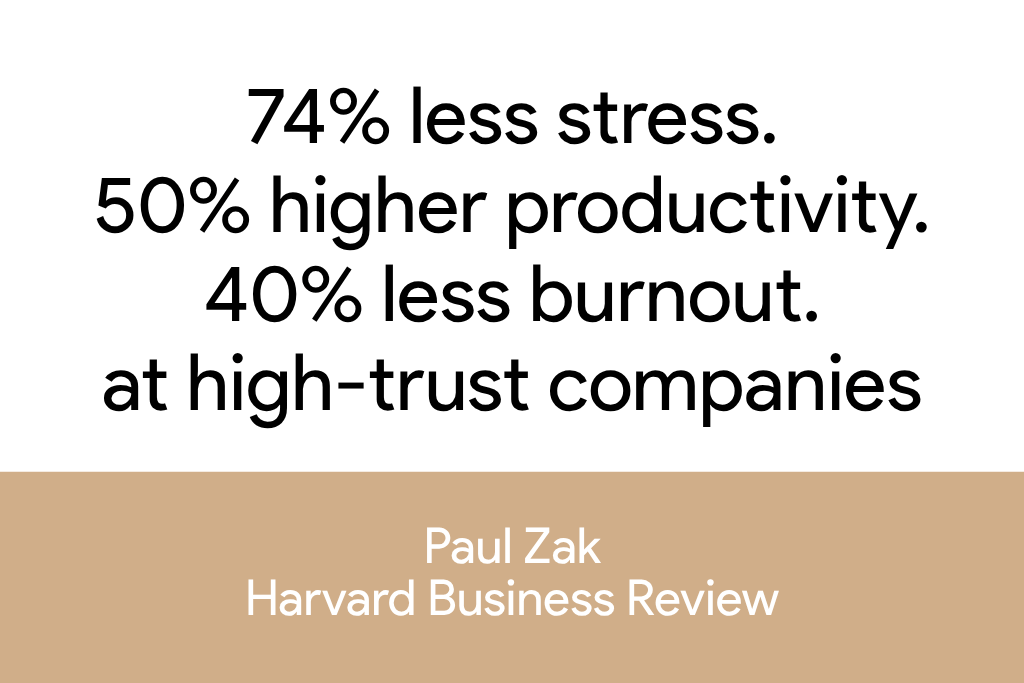
The most important shift Anna's work invites is to stop treating trust as a nice-to-have. Harvard researcher Paul Zak spent decades studying the neuroscience of trust, and the numbers are hard to argue with. Compared with people at low-trust companies, people at high-trust companies report 74% less stress, 50% higher productivity, 76% more engagement and 40% less burnout. Trust is not a feeling that is pleasant when it shows up. It is a measurable driver of performance, and it runs on brain chemistry a leader can influence.
Pressure is contagious. So is calm.
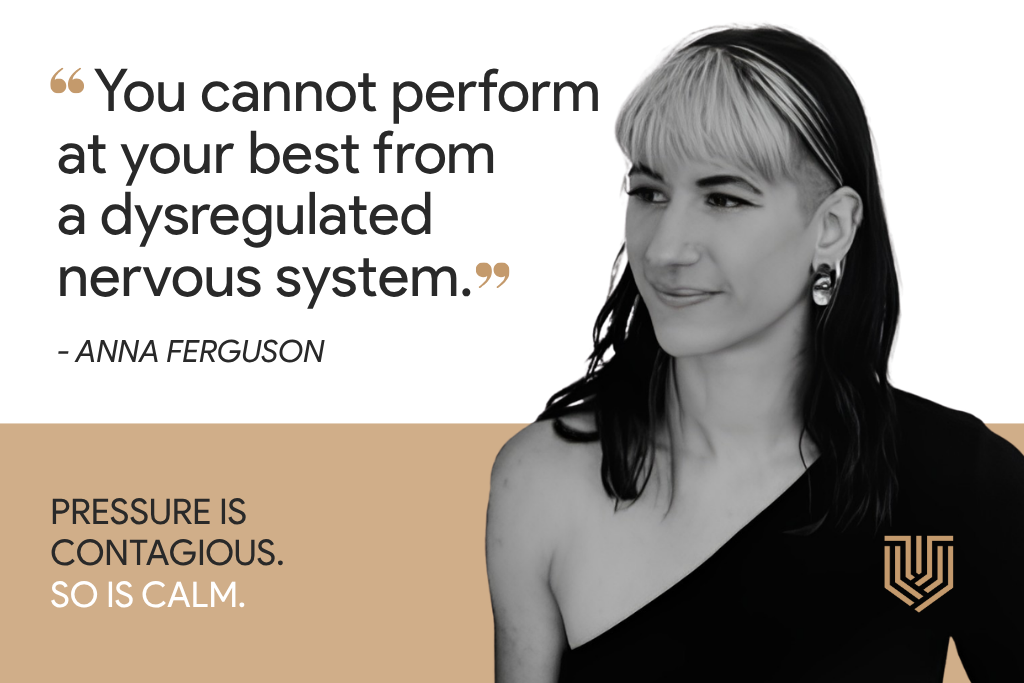
Here is the part most leadership training misses, and it is the line the summit itself borrows for this session: pressure is contagious, and so is calm. Human nervous systems are wired to read and mirror each other, a process called co-regulation, which means a leader's stress quietly spreads through a team, and so does their steadiness. When a leader walks into a room dysregulated, the room feels it. When they walk in grounded, the room borrows that too. You cannot perform at your best from a dysregulated nervous system, and neither can the people taking their cue from you.
The way you show up is the multiplier
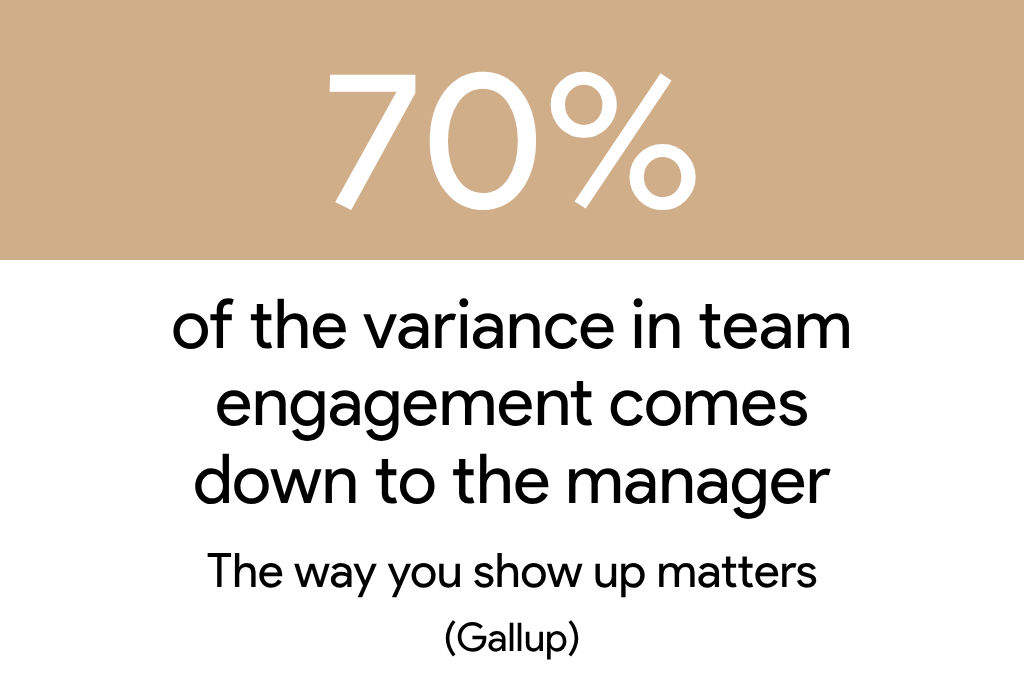
If a leader's state sets the tone, then the leader is the single biggest variable in how a team feels and functions. Gallup's research makes the point plainly: managers account for 70% of the variance in team engagement. Not the perks, not the policies, the manager. That is a heavy responsibility, but it is also an opportunity, because it means the way you show up is not a side issue. It is the job. At a summit focused on workforce pressure, it is also a reminder that a calmer leader is a practical lever for a calmer, more engaged team.
Calm is a skill you can train
The good news running through Anna's work is that a regulated nervous system is not something you are simply born with or without. It can be trained, the same way you would train any other capability. Her own path to that understanding came the hard way, through a serious accident as a child and, years later, through Muay Thai, where the training finally gave her the calm she had been chasing. Out of that came a career teaching hundreds of thousands of people the practical science of settling their own physiology.
For leaders, that is the reframe worth holding onto. Composure under pressure is not a fixed personality trait you either have or you do not. It is a set of skills, breath, attention and small daily practices, that steady your nervous system so you can think clearly, decide well and lead people who trust you.
From insight to action
- Treat trust as a performance metric, not a personality trait. It is measurable, and it moves results.
- Notice your own state before a hard conversation. Your team will catch it either way.
- Remember you are the multiplier. How you show up shapes how your team shows up.
- Train your calm. Breath and attention are skills, and they improve with practice.